
Entry 10: Dark Information Age
We archived everything. Somehow, we still forgot how to remember.

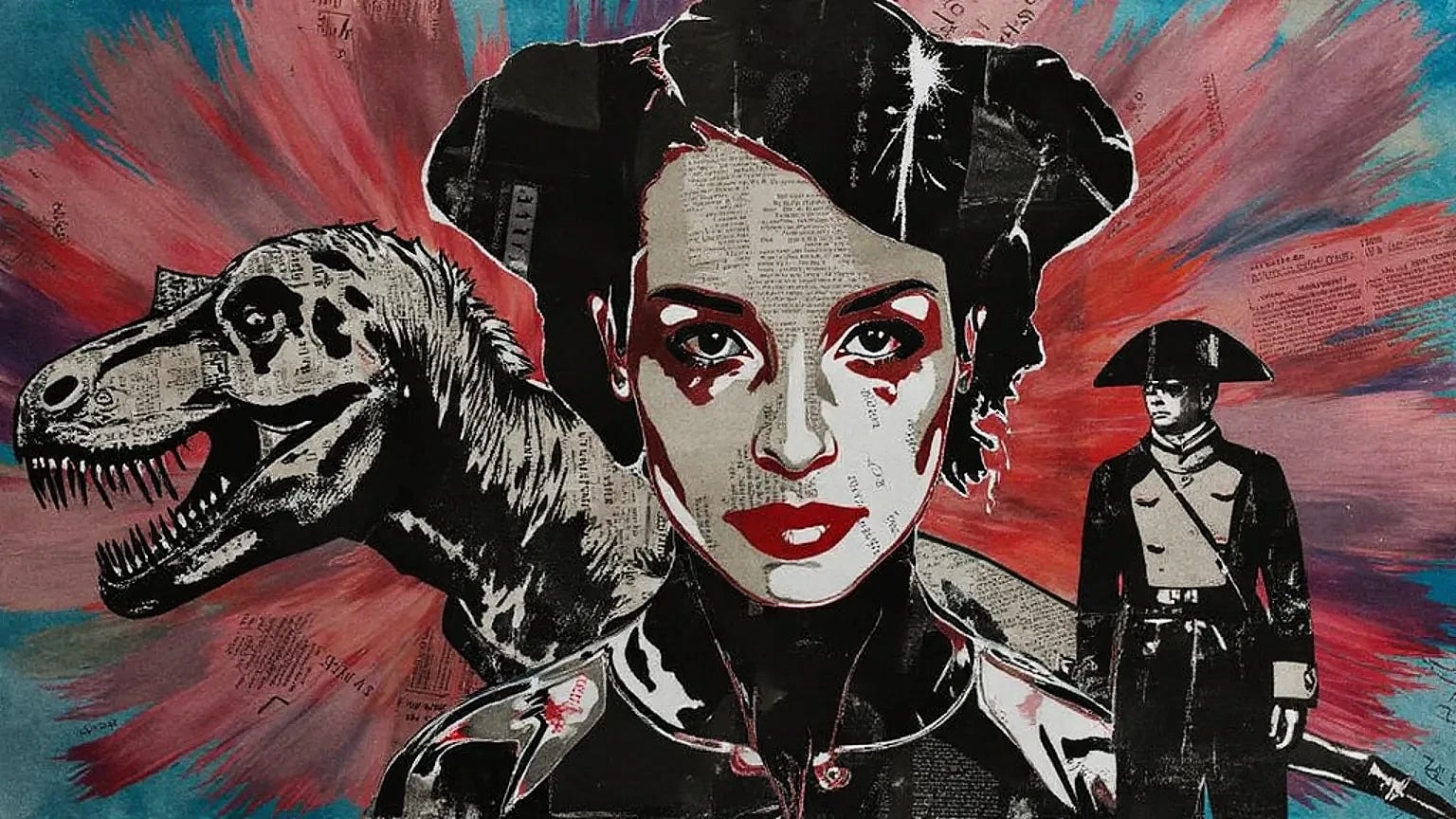
This morning, my kid asked if World War I came before or after the dinosaurs.
I laughed. But the question stayed with me.
Not because it was weird, but because it made sense.
The timeline feels blurry these days.
Everything seems equally far away now.
Yesterday’s headlines. Ancient Rome.
The last time I remembered my phone number without checking if it was correct.
I pulled out my phone to show her a quick history video.
Then a notification. Then a group chat.
Then something about how Napoleon might have been invented by the British.
By the time I found the video, she was gone,
humming the Mario theme
and building a Lego spaceship.
I looked down at the screen.
Thousands of years of human memory in my hand.
And I didn’t feel any closer to understanding it.
We’ve saved the past.
Sorted it. Tagged it. Optimized it for search.
But something got lost in the process.
The more I scroll, the less I remember.
I know the facts.
Or at least what I’ve been told are the facts.
The approved sequence. The packaged version.
But they don’t stay with me. They blur and fade.
The past has become a feed.
And feeds are made to be forgotten.
I think we’re living in a dark information age.
Not because we lack knowledge.
But because we can’t hold on to any of it.
Too much. Too fast. No friction.
Everything is equally clickable.
Equally forgettable.
So I closed the app.
Grabbed a junk mail flyer from the kitchen counter.
One of those “LIMITED TIME OFFER” mattress ads.
And drew a timeline with my kid.
It was messy.
Full of guesses.
The dinosaur stood proudly on top of a queen-sized hybrid foam deal.
It was not accurate.
But it was real.
Maybe the past does not want to be understood.
Maybe it just wants to haunt our generation quietly.
Watching to see if we notice anything real.
Because memory is not built from knowing.
It is built from noticing.
And if no one is noticing, the past just dissolves.
The timeline we drew was made up.
But then again, so are most of them.
How do we bring the past to stay, in order to not repeat similar mistakes made across historical timelines?
Ugh.. so much food for thought here, Marie!
The feed is based on algorithm and somehow the algorithm of history has not been necessarily improved 🧐